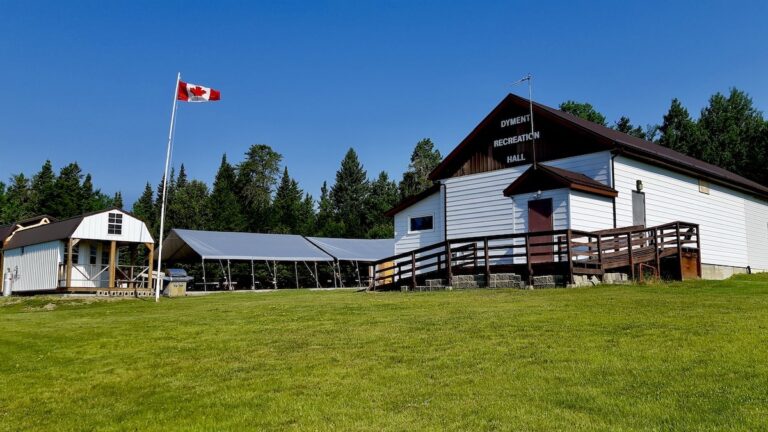

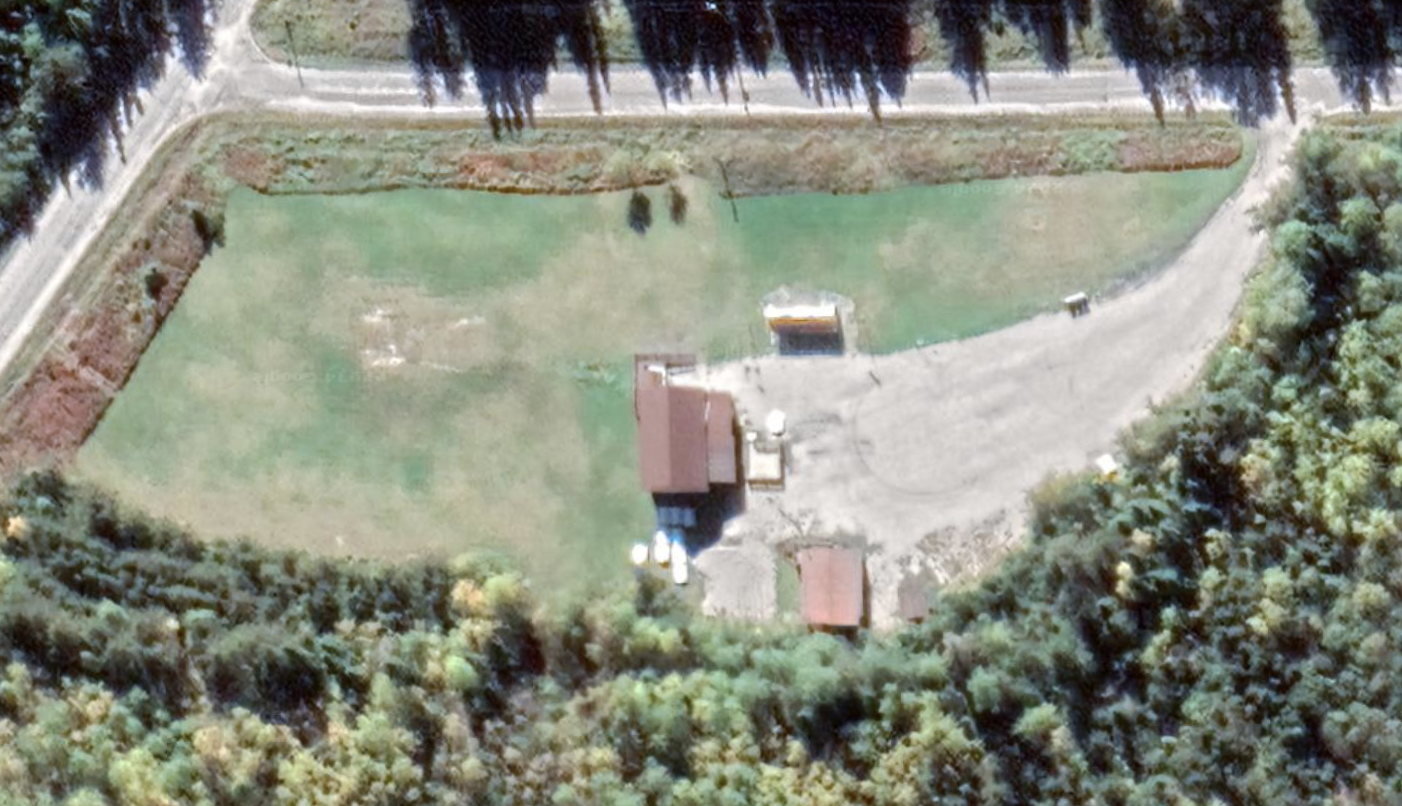
An overhead view of the Melgund Township recreation complex, which supports the communities of Dyment and Borups Corners and area in Northwestern Ontario.
We may be an unorganized territory, but our 344 recommendations to the federal government proves Melgund is more organized than ever.
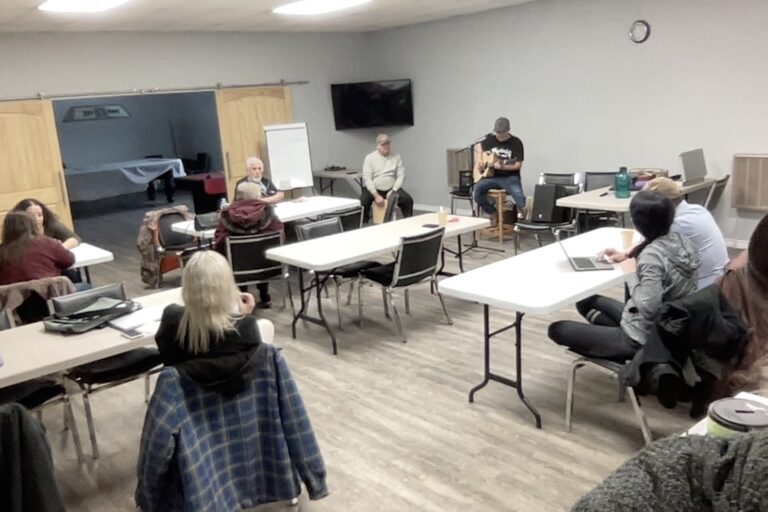
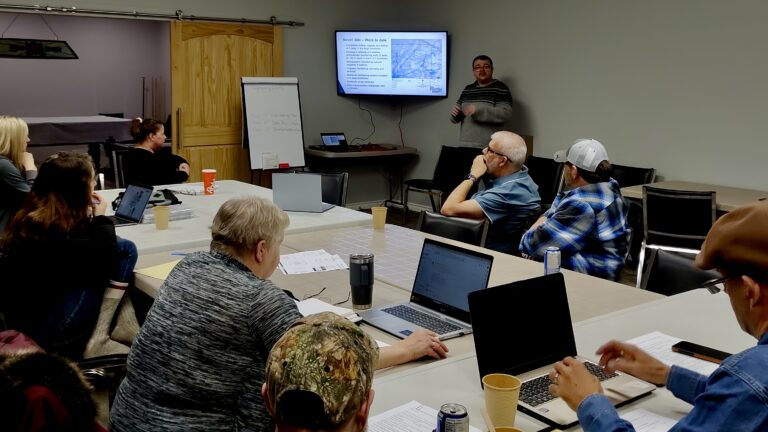
Here in the quiet stretches of Northwestern Ontario, between the Highway 17 bends of Dyment and Borups Corners, silence is usually a way of life. But lately, that silence has been replaced by a lot of focused, urgent conversation.
This week, we submitted a formal package of 344 technical recommendations to the Impact Assessment Agency of Canada. The target: the Nuclear Waste Management Organization’s (NWMO) Initial Project Description to build a Deep Geological Repository for Canada’s used nuclear fuel right in our backyard.
To some, 344 recommendations might just look like a big number on a spreadsheet. But to those of us who live here, each of these recommendations represent every well, every backroad, and every family that calls this unorganized territory home.
Why 344?
The reason the list is so long is simple: when you live in an unincorporated township, you don’t have a mayor or a city council to fight for you. We don’t have a large tax base, and we don’t have local departments. We’re always excluded from key conversations and decision-making processes because we’re not a municipality – and that’s wrong.
The potential impacts on Dyment and Borups Corners are profound and currently undervalued in the NWMO’s narrative. Public sentiment analysis within our jurisdiction reveals a significant trust gap, as residents feel like ghosts at a dinner party—ignored in the hosting and benefit frameworks despite being the closest human receptors.
The unorganized status of Melgund makes our decentralized infrastructure, such as private wells and volunteer-supported social networks, extremely vulnerable to project-induced changes. The NWMO’s characterization of land-use impacts as mere perceptions of contamination fails to account for the tangible economic and social displacement that occurs when quiet, nature-oriented communities like ours are transformed into a high-intensity industrial nuclear hub.
We realized that if we didn’t speak up with surgical precision, our unique risks would be buried under corporate optimism.
Click here to read the full list of recommendations to the IAAC.
Our Top 10 Requirements for the IAAC
1. Demonstrate 100% Emergency Self-Sufficiency
Requirement: The NWMO must provide fully independent, on-site fire, medical, and security services for all project phases.
Why it matters: Melgund and Revell Townships have no local fire, police, or ambulance services. Reliance on distant emergency hubs in Ignace or Dryden—over 40 km away—creates life-threatening response delays. As the communities closest to the Revell site, residents face the highest immediate risk from site emergencies or transport incidents. Without fully self-sufficient on-site emergency capacity, any accident could have catastrophic consequences for our population.
2. Measure the Neighbours, Not the Region
Dyment and Borups Corners must be treated as separate, local communities in all studies. Grouping us with distant towns, or using generalized “average” locations, is unacceptable. Combining our data with faraway communities hides the real impacts on people who live just 10–13 km from the site. This affects noise, air quality, traffic, emergency response, and local services, and risks underestimating the true effects on our daily lives. Local, community-specific data is essential to ensure the safety, property values, and well-being of residents closest to the Revell DGR are fully recognized.
What needs to happen: Combining our data with faraway communities hides the real impacts on people who live just 10–13 km from the site. This affects noise, air quality, traffic, emergency response, and local services, and risks underestimating the true effects on our daily lives. Local, community-specific data is essential to ensure the safety, property values, and well-being of residents closest to the Revell DGR are fully recognized.
3. Beneath the Surface: No Assumptions Allowed
The Revell DGR sits atop a 40 km × 15 km batholith, and without comprehensive, site-specific geological verification, the risk of groundwater contamination and long-term structural instability remains unknown. As the closest residents, Dyment and Borups Corners face direct threats to drinking water, property, and community safety. For a project of this magnitude and multi-century lifespan, assumptions based on minimal boreholes are unacceptable, and mitigation strategies must be grounded in full, measured reality, not incomplete data.
What needs to happen: The NWMO must conduct more, site-specific drilling and physical mapping across all inferred fracture zones, extending beyond the six existing boreholes to fully characterize the batholith. They must implement long-term monitoring of groundwater flow and rock stability, provide complete, transparent data to regulators and residents for independent review, and ensure that all mitigation strategies and repository designs are finalized only after every fracture zone has been verified, protecting communities like Dyment, Borups Corners, and regional communities from potentially catastrophic risks!
4. Require Baseline Data and Discharge Modeling for Water Management
The NWMO references treated effluent releases and surface water management but provides no site-specific data. Residents of Melgund rely entirely on local surface water and groundwater, with no municipal treatment systems. Any interaction between project water management and local aquifers or streams poses a direct risk to our drinking water supply. And if something happens to the water, it’s coming out of your pocket, not theirs.
What needs to happen: The NWMO must provide rigorous baseline data and detailed modeling for treated effluent releases and water collection ponds. This ensures that any changes to water quality can be accurately monitored and attributed, holding the project accountable for protecting the unorganized territory’s water resources.
5. Reject Reliance on Distant Meteorological Data
The NWMO’s submission uses data from places like Dryden, 55 km northwest, to model critical factors such as wind speed, precipitation, and temperature. For Melgund Township—specifically Dyment and Borups Corners—this distance introduces unacceptable potential margins of error for air quality, noise propagation, and potential radiological dispersion.
What needs to happen: Immediate installation of on-site meteorological monitoring stations is required to capture local microclimate conditions. This ensures that atmospheric data affecting local residents is measured directly, rather than approximated from some distant municipality, creating a scientifically defensible baseline that reflects the unique geography of our unorganized territory.
6. Action MMIWG Call for Justice #13
The NWMO says MMIWG (Missing and Murdered Indigenous Women and Girls) Call for Justice #13 is important, but without specific programs or monitoring, this is just a high-level statement rather than a verifiable mitigation strategy. In raising this, NWMO appears socially aware, but its socio-cultural commitments are performative and lack actionable detail.
What needs to happen: The NWMO must provide a clear roadmap for implementing Call for Justice #13. This should include concrete measures such as gender-based analysis plus (GBA+) in workforce planning, community safety protocols tailored to extractive industries, and a transparent process for resolving conflicts between traditional governance systems and federal regulatory mandates. Without these steps, the commitment cannot be considered credible or enforceable.
7. High Wages, Higher Prices: Championing Food Security
Food costs are a major issue for everyone these days. The NWMO acknowledges that baseline conditions in Ignace and Dryden include increasingly high food costs and growing food insecurity, particularly for vulnerable populations such as seniors and Indigenous peoples. Introducing a high-wage project workforce during construction could exacerbate local inflation, making basic necessities even more unaffordable for communities closest to the site, including Dyment and Borups Corners.
What needs to happen: The NWMO cannot be a passive observer. It must step up and actively champion food security for the surrounding communities by assessing, mitigating, and monitoring project impacts on access to Crown land, traditional harvesting, and local subsistence activities. This includes funding and implementing initiatives that reduce household food costs, community gardens, cultural and land-based food practices, and strengthen regional resilience for residents who rely on these lands for nutrition, survival, and well-being.
8. Require a Mental Health and Addiction Mitigation Plan
The NWMO acknowledges that regional mental health and addiction services are insufficient to meet current demand. Melgund residents rely entirely on these same supports, which are already stretched thin. Any increase in demand from the project workforce could overwhelm existing services, directly affecting the health and well-being of local and regional residents.
What needs to happen: The NWMO must provide a detailed mitigation plan detailing how mental health and addiction services will be augmented, funded, and monitored to ensure the community’s needs are fully met throughout all project phases.
9. Object to Premature “Risk-Informed Assessment” Claims
The NWMO says its studies are “sufficiently advanced to support a risk-informed assessment,” yet simultaneously admits that “further field studies are needed to verify the presence and distribution of SAR [Species at Risk].” This is a logical contradiction! Claiming readiness to assess risks while lacking verified data on species breeding on-site is scientifically and environmentally unsound. For Melgund Township, accepting an Impact Assessment based on unverified predictions puts local ecosystems and residents’ safety at risk.
What needs to happen: The IAAC must require the NWMO to pause or flag the risk-informed assessment as preliminary until all species distribution data gaps are resolved. This makes sure mitigation strategies and management plans can be grounded in actual, verified, site-specific data, not untested or made-up assumptions.
10. “Mobile Chernobyl” and a Highway to Hell
A major concern raised overwhelmingly by commenters across Canada is the attempt to exclude transportation from the formal Impact Assessment. This cannot be allowed to happen. Treating the repository and its transport network as separate projects constitutes a dangerous form of “project-splitting.” Transportation is an integral part of the DGR project, and failing to assess cumulative risks—including accident likelihood, radiation exposure, and security threats—renders the assessment incomplete and unsafe over the 50-year shipping timeline.
What needs to happen: The IAAC must deny the NWMO’s request to exclude transportation from the Impact Assessment. The IAAC needs to require the NWMO to conduct a full corridor-specific Emergency Response Gap Analysis that considers local conditions, seasonal population changes, inexperienced truck drivers, winter hazards, and current emergency service capacity, ensuring transport risks are fully integrated into the Impact Assessment.
Click here to read the full list of 344 recommendations on the IAAC web site.
About the Author