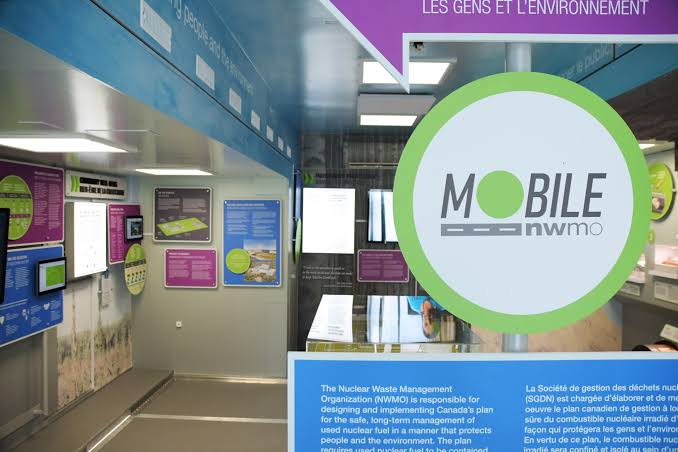

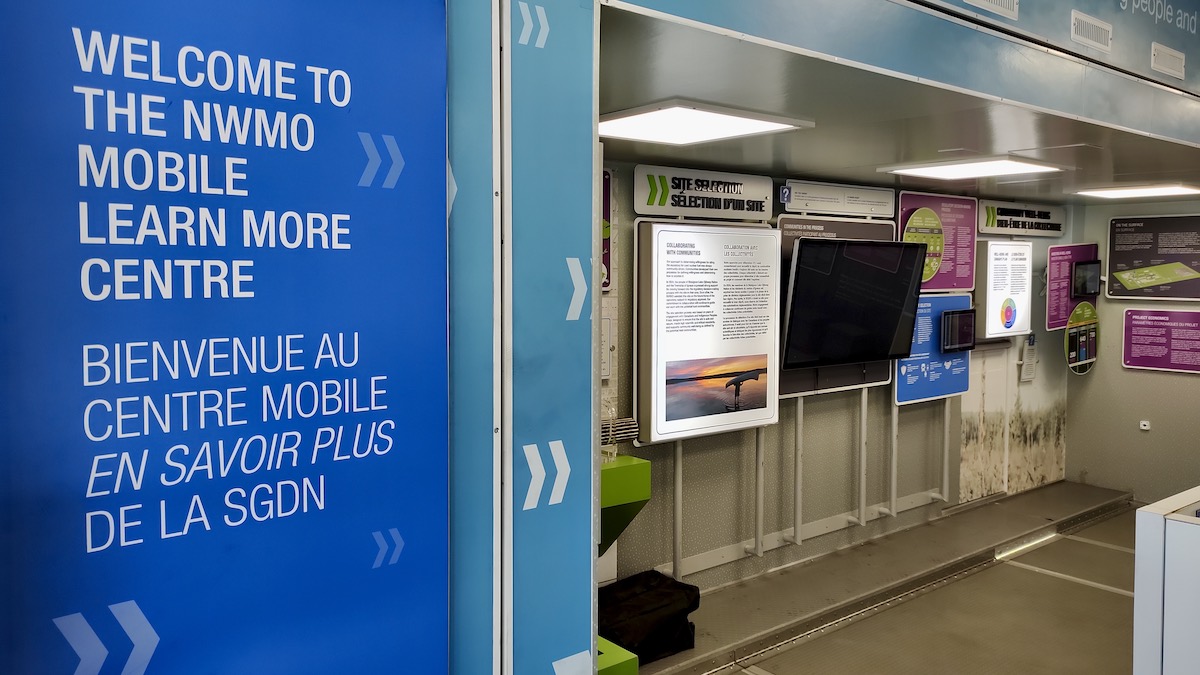
Interactive displays and physical models offer a different way of understanding the proposed repository than documents and presentations alone. The centre’s stop in Melgund gave residents a chance to look, ask questions and talk through what they were seeing.
The NWMO brought its travelling information centre to Melgund, where the proposed repository has its most immediate local significance.
The proposed Deep Geological Repository (DGR) for Canada’s Used Nuclear Fuel Project is not an abstract issue for Melgund. Its communities are the closest to the proposed repository and are expected to experience its impacts more directly than any other community in the area.
That made last Friday’s visit from the Nuclear Waste Management Organization (NWMO) particularly relevant. The NWMO Mobile Learn More Centre pulled into Dyment Recreation Hall and Park for an afternoon of interactive exhibits, conversation and community gathering.
From 3:00 to 7:00 p.m., residents could step inside the mobile centre to examine detailed models and interactive displays explaining how the proposed underground repository is designed to work. The technology offered a way to see the scale and structure of a project that is normally discussed through technical documents, maps and public meetings.
The visit also brought the conversation onto familiar ground. Neighbours gathered at the hall, talked with NWMO staff, asked questions and discussed issues including environmental protection, safety and the project’s long-term plans. Hot dogs and burgers on the grill added a distinctly local element to what could otherwise have been a highly technical information session.
The timing is significant. The federal government is now considering the proposed designation of the controversial nuclear waste program as a Project of National Interest under the Building Canada Act.
A notice published in the Canada Gazette on September 18 opened a public comment period on the proposed designation. The project had previously been referred to the Major Projects Office on June 24.
The proposed designation would place the DGR within a federal framework concerned with major infrastructure, energy security and economic competitiveness. For Melgund residents, however, the project is already a local reality: Dyment and Borups Corners are closest to the proposed repository and the place where questions about its social, economic, environmental and cultural effects have an especially immediate significance.
That makes local capacity important as the federal process develops. Communities need the ability to maintain their own records, understand technical and policy developments, document changes and assess how the project intersects with the people, places and systems around it.
Public comments on the proposed designation can be submitted to the Major Projects Office at DGRComment-CommentaireDSCGP@mpo-bgp.gc.ca until the end of the day on October 26, 2026.
For Melgund Township and those who live here, the federal process may be national in scope, but the project remains very close to home.
About the Author