
Recommendations for Socio-Economic and Transportation Risk Mitigation
A public submission to the Impact Assessment Agency of Canada
This draft submission was prepared and submitted to the Impact Assessment Agency of Canada to ensure the unique concerns of Dyment and Borups Corners—those living closest in proximity to the Revell DGR site—are formally recognized in the regulatory review process. Unorganized communities like ours face a distinct set of risks because we lack the municipal infrastructure, tax base, funding resources and local services available to incorporated townships like Ignace.
Safety and Self-Sufficiency
The primary mandate of this submission includes demanding that the NWMO demonstrate 100% self-sufficiency in emergency response and physical safety services across all project phases, including the 800 worker accommodation camp and transportation corridors.
Melgund Township is an unorganized territory with zero local fire, police, or ambulance services, meaning any reliance on distant regional hubs in Ignace or Dryden creates unacceptable response times that could be fatal in the event of a transport accident or site emergency.
We feel the NWMO must formally list 100% Proponent-supplied emergency services as a critical project requirement to ensure that their industrial footprint does not strain non-existent local resources or already stretched regional services.
Furthermore, the Local Services Board and local residents request the immediate establishment of site-specific environmental and socio-economic baselines rather than relying on generic regional models.
We reject the use of meteorological data from the Dryden station, located 55 km away, as it introduces significant margins of error for modeling local air quality, noise propagation, and potential radiological dispersion.
Water is Life
Because our residents rely exclusively on private wells for potable water, we require a rigorous, quantitative hydrogeological analysis that includes direct testing of private wells in Dyment and Borups Corners to protect local water security from potential contamination.
Procedurally, we challenge the Proponent’s exclusion of Melgund from the collaborative design of baseline programs and demand the immediate inclusion of the Local Services Board and community resident participation in all future study designs.
For residents living adjacent to the site, simplified “plain-language” summaries are insufficient to assess risks to health and property values; therefore, we require access to raw technical data and independent review funding equal to that provided to the host municipality.
Finally, the review must formally identify Borups Corners and Dyment as distinct receptors separate from the Township of Ignace to ensure that impacts on our property values, social cohesion, and community well-being are accurately measured rather than diluted by distant regional data.
The 30-day window for consultation and submissions is grossly inadequate and undemocratic
The Local Services Board echoes the deep frustration of residents and commenters from across Canada, who view the 30-day public comment window as a structural barrier designed to preclude meaningful participation rather than facilitate it. Expecting a community of volunteers and working families to review and professionally critique over 1,200 pages of highly technical engineering and geological data in just four weeks is fundamentally unreasonable and serves to disenfranchise those living closest to the Revell site.
This abbreviated timeline—further obstructed by poor digital accessibility in our rural area and a lack of physical documents—suggests a process prioritized for speed rather than diligent oversight or democratic integrity. Forcing local stakeholders to navigate such a compressed schedule, the regulatory process risks being reduced to a hollow administrative exercise that ignores the practical constraints of unorganized territories and erodes public trust in the assessment’s “good faith” intentions.
Exclusion of Socio-Economic Baselines is Unacceptable
We strongly oppose any attempt by the Proponent to bypass the Impact Assessment Act (IAA) by claiming that social and economic oversight is already addressed under the Nuclear Fuel Waste Act (NFWA).
We formally request that the regulatory authorities deny any application to exclude these programs under Section 7 of the IAA.
Relying on a “jurisdictional carve-out” to limit federal scrutiny is a dangerous precedent, especially for a project with a 160-year lifecycle that carries immense long-term uncertainty.
To ensure a rigorous and transparent evaluation, the “one project, one assessment” principle must not be used as a loophole to dilute accountability; rather, the socio-economic impacts on communities like Melgund must remain central to the Integrated Impact Assessment process and subject to the highest level of federal oversight.
Transportation must be included in the Impact Asssessment
We also insist that the transportation of high-level nuclear waste be fully integrated into the formal scope of the Impact Assessment, as separating the repository from its transit network constitutes a dangerous instance of “project-splitting.”
For the residents of Melgund, the reliance on Highways 11 and 17—our primary lifelines—introduces a level of risk that the current regulatory framework fails to address and seeks to avoid. These corridors are notorious for severe winter icing, frequent closures, and high-velocity wildlife collisions, making them fundamentally unsuitable for the thousands of heavy radioactive shipments planned over several decades. We reject any assessment that excludes these transit risks, as a single accident could not only lead to catastrophic watershed contamination but also sever the Trans-Canada Highway, paralyzing the national supply chain.
Furthermore, we must emphasize the total absence of emergency preparedness along this route. What some commenters have referred to as a potential “Mobile Chernobyl” risk is not merely hyperbole to those of us living alongside these tracks and roads; it is a mathematical inevitability over a 50-year shipping window.
Our region is served by volunteer responders who lack the specialized training, shielding equipment, and containment resources required to manage a high-level radiological breach. To proceed without a deep and comprehensive, public federal review of these cumulative transportation hazards—and without a funded, professionalized emergency response infrastructure—is to gamble with the safety of Northern Ontario’s corridor communities. We demand that transportation be treated as an inseparable, high-risk component of the DGR project.
Community Benefit and Mitigation Fund
Beyond generic regional promises, the Local Services Board demands the establishment of a dedicated, legally binding and permanent Community Benefit and Mitigation Fund exclusive to Melgund and independent of any agreements with the Township of Ignace.
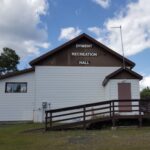
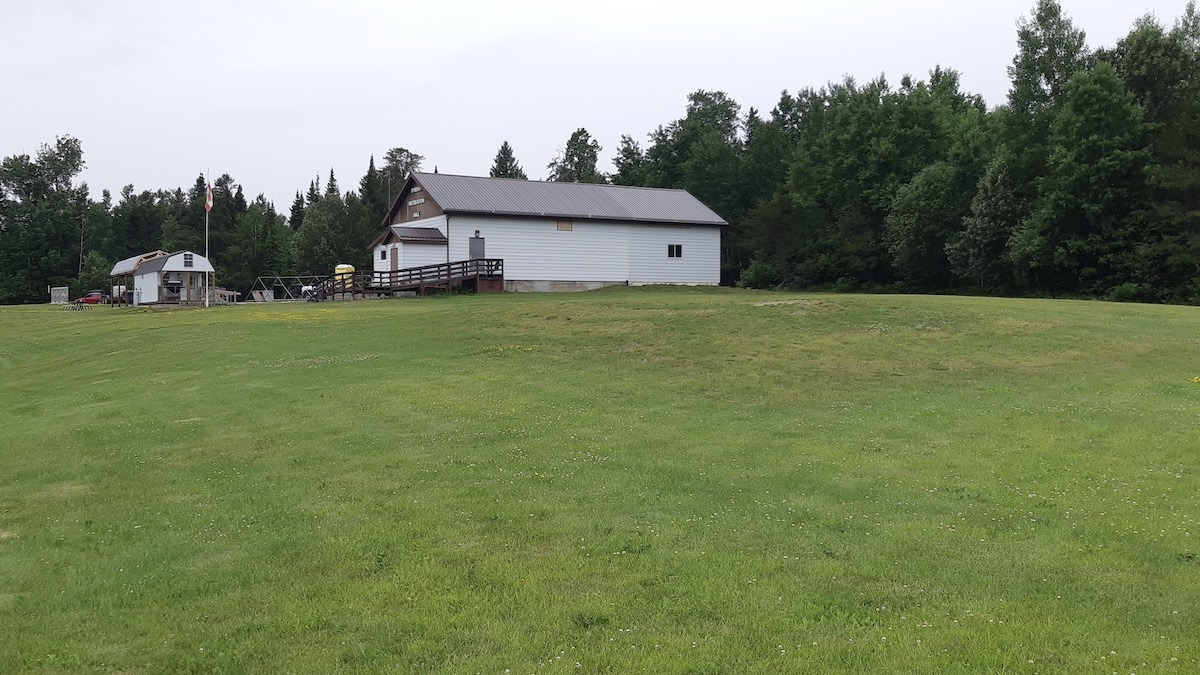
As the residents bearing the most immediate proximity to the Revell site, we require direct, long-term support for infrastructure such as Dyment Recreation Complex—the heart of our community—and the installation of permanent, township-based monitoring stations to provide transparent data on noise, vibration, and traffic impacts.
We insist on enforceable assurances that protect our property values and preserve our rural lifestyle from the corrosive effects of “stigma” and potential for industrial sprawl.
For a project of this magnitude, willingness, consent and cooperation cannot be bought with regional programs that dilute the specific harms faced by Melgund who live closest to the site; they must be secured through concrete, ongoing and long-term local investments that ensure our community is not sacrificed for the sake of national infrastructure.
We also attached a list of proposed recommendations for working groups and community involvement and engagement moving forward in the impact assessment process. We respectfully requested and insisted these recommendations be included in the review and given serious consideration.
Click here to view the list of 344 recommendations we submitted to the IAAC.
About the Author