
Melgund Township Residents Are the Closest—and Most Impacted—by the DGR
A Public Submission to the Impact Assessment Agency of Canada
After a month of dialogues and engagement, The Local Services Board of Melgund, its recreation committee and impacted residents submitted the following comments regarding the Summary and Initial Project Description for the Revell Site Deep Geological Repository (DGR).
As the volunteer-driven body representing the unincorporated communities of Dyment and Borups Corners, we identify several critical and recurring gaps in the proponent’s assessment of socio-economic, recreational, and land-based impacts.
We have reviewed the Summary and Initial Project Description through several community-engaged dialogues and raise the following critical concerns:
We are the closest communities in proximity to the Revell DGR site.
While the Nuclear Waste Management Organization (NWMO) consistently centers its analyses on the Township of Ignace and WLON, Dyment and Borups Corners are the closest human receptors to the Revell site, located approximately 13 kilometres and 10 kilometres away, respectively. As a result, our residents will experience the most direct and acute disruptions to recreational land use, quiet enjoyment, community safety, food security, and property values. Despite this proximity, Melgund is repeatedly treated as a peripheral regional subset rather than as a primary impact receptor.
Our communities formally insist that the Agency immediately reject the NWMO’s assertion that Section 7 of the Impact Assessment Act (IAA) should not apply to its social and economic programming.
Reliance on obligations under the Nuclear Fuel Waste Act (NFWA) is not an adequate substitute for the transparency, accountability, and enforceability provided through the IAA. The NFWA does not offer a comprehensive socio-economic assessment framework, nor does it provide residents of unorganized territories living in direct proximity to the DGR site with mechanisms to negotiate or influence mitigation and enhancement measures for a project of this scale and duration.
Constraining the scope of the federal assessment effectively disenfranchises the residents of Melgund Township, who live in an unorganized territory with no municipal government, a severely limited tax base, and minimal administrative capacity to independently manage the significant and cascading impacts of a nationally significant nuclear industrial complex.
Site-Specific Impacts and Deficiencies in the Proponent’s Analysis
The NWMO’s preliminary socio-economic assessments rely on broad illustrative economic regions that are inappropriate for a site-specific evaluation. This approach actively obscures the realities of an unorganized township that operates with zero local emergency services and relies heavily on Crown land access for recreation, subsistence activities, and community cohesion.
Our communities request that the Agency require a Melgund-specific Socio-Economic and Environmental Impact Study. This study must include baseline data collected at the coordinates of Dyment and Borups Corners, including noise, vibration, traffic, light pollution, food security and land-use impacts. Assertions that effects will be “negligible to low” lack credibility without technical definitions of these terms and without site-specific baseline measurements, particularly with respect to property values and quiet enjoyment of land.
Recreation, Crown Land Withdrawal, and Food Security
Food insecurity in northwestern Ontario is a severe and persistent challenge, particularly for residents of remote and unorganized townships such as Melgund. High food prices, limited retail options, and reliance on imported goods create chronic vulnerability, and many households depend on land-based harvesting, hunting, fishing, and foraging to supplement diets and reduce costs. The loss of access to Crown land for these activities would directly threaten the ability of families to secure adequate, nutritious food, disproportionately impacting vulnerable households and compounding existing inequities. For communities already facing significant systemic and structural barriers, the DGR’s encroachment on traditional and recreational lands risks worsening food insecurity and undermining regional resilience.
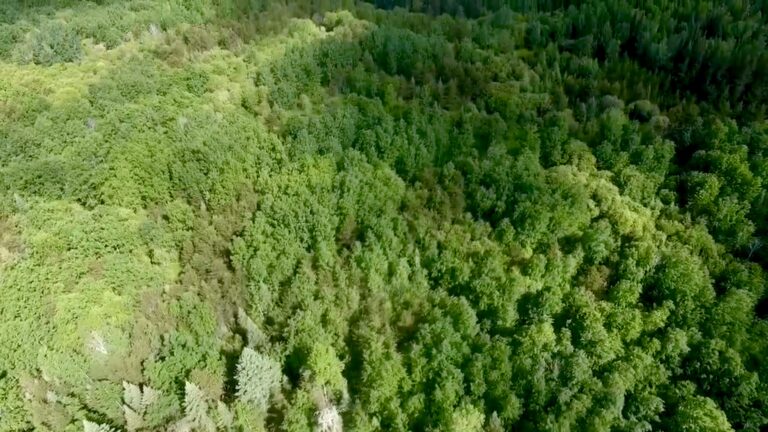
The proposed withdrawal of approximately 17,600 hectares of Crown land from the Wabigoon and Dryden Forest Management Units represents a significant and permanent loss of access for hunting, trapping, foraging, snowmobiling, and other land-based recreation and other land-based subsistence activities, including wild berry and plant harvesting. For Melgund residents, these activities are not discretionary amenities; they are integral to food security, household economies, cultural continuity, and cost-of-living mitigation in a region facing severely high food prices and limited retail access.
We assert that food security must be explicitly recognized as a socio-economic issue within the assessment. Reduced access to wild game, fish, and traditional harvesting areas will directly increase household food costs and reduce regional resilience. These impacts are disproportionately borne by residents of unorganized communities that lack compensatory services or income-sharing mechanisms.
We therefore insist that the Agency designate the Forestry Land Base as a formal Valued Component, with a quantitative and qualitative assessment of how land withdrawal affects recreational access, subsistence harvesting, and local food systems. Loss of access must be treated as a tangible socio-economic impact, not an administrative or regulatory adjustment.
Further, our communities request a comprehensive map of all proposed safety, security, and exclusion zones so residents can clearly understand which recreational and food-producing areas will be restricted or lost.
Active Betterment, Not Passive Mitigation
A central flaw in the NWMO’s methodology is its reliance on a static mitigation framework that assumes the Proponent’s role is limited to maintaining present conditions. This approach ignores the NWMO’s responsibility—and capacity—to act as an active contributor to regional resilience and socio-economic betterment over the life of the project.
This failure is particularly pronounced in Melgund, which is excluded from the Ignace Hosting Agreement and the unacceptably secret WLON agreement despite being the most proximate and severely impacted communities. As an unorganized territory with a limited tax base, Melgund residents receive none of the formal benefit-sharing mechanisms relied upon by the Proponent to justify positive regional outcomes.
The Board therefore requests that the Agency require the NWMO to develop a binding Socio-Economic Betterment Plan. This plan must include direct investments in local recreational infrastructure, community facilities, and food security initiatives, such as support for hunting access, community freezers, land-based programming, and transportation resilience. These measures must be administratively and legally separate from agreements with the Township of Ignace and WLON.
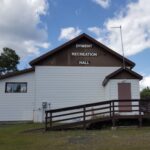
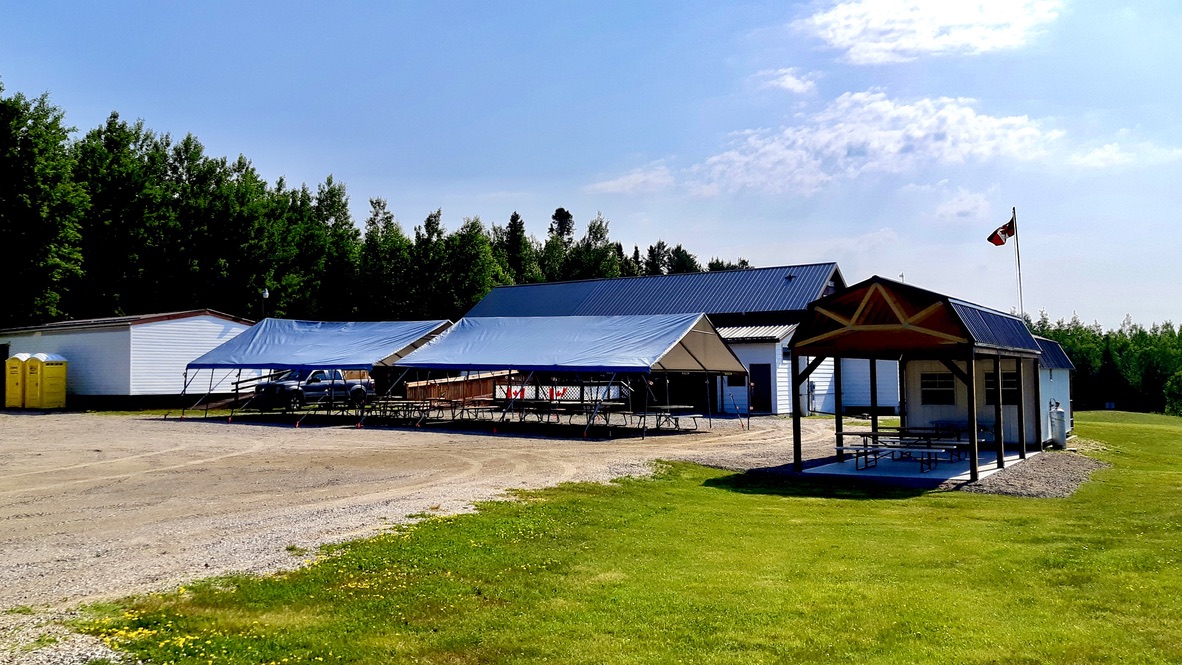
A dedicated Community Protection Fund for Melgund Township must be established to compensate for lost recreational access, increased living costs, and long-term community disruption. This fund should also support critical infrastructure upgrades, including facilities such as the Dyment Recreation Hall, which serve as essential social anchors in an unorganized territory.
Community Co-Design, Research Governance, and Procedural Equity
We further assert that residents of Dyment and Borups Corners and the surrounding area closest in proximity to the DGR must be meaningfully included in the co-design, governance, and implementation of all socio-economic, environmental, and land-use studies that assess impacts on their communities. Research that informs decisions affecting the future of Melgund cannot be designed, interpreted, or validated solely by the Proponent, outsiders or external consultants without direct community involvement. The imposition of research on our communities we have no input into is unethical.
As an unorganized territory, Melgund lacks the institutional buffers and protections available to incorporated municipalities. This makes equitable participation in baseline, site characterization and field research not just a best practice, but a necessary condition for procedural fairness under the Impact Assessment Act. Studies conducted without impacted resident co-design risk mischaracterizing local conditions, overlooking informal and traditional land-use patterns, and underestimating cumulative effects on recreation, food security, and community cohesion.
We therefore request that the Agency require the NWMO to establish a formal Community Co-Design Framework. This framework must guarantee Melgund residents equitable opportunities to participate in the ethical co-design of all baseline studies, the selection of indicators, the identification of valued components, and the interpretation of results. Participation must be supported with appropriate resourcing, including compensated time, accessible meeting formats, ethical and locally based data collection, to ensure that engagement is substantive rather than symbolic.
Further, research ethics and methodologies must explicitly incorporate and respect local and land-based knowledge, recognizing residents as experts in their own lived environment. Community participation must occur at the earliest stages of study design and continue throughout the lifecycle of the project, including monitoring, adaptive management, and post-closure phases.
Finally, our communities request that the Agency require transparency and accountability mechanisms within all studies affecting Melgund, including clear pathways for community review, challenge, and revision of findings. Without such provisions, the assessment process risks perpetuating structural inequities by excluding those most affected from shaping the evidence used to evaluate impacts.
Any research conducted on or about Melgund residents and land use in immediate proximity to our communities must be done with the full, informed participation of the community. Current approaches by the NWMO, which rely on “desktop studies”, southern outsiders, external consultants and generic regional data, fail to meet basic ethical standards for community-based research. This top-down proponent-imposed methodology risks misrepresentation, erasure of local knowledge, and unjust outcomes.
The Agency must require immediate correction: no study that impacts Dyment, Borups Corners, or surrounding lands should proceed without formalized, enforceable, and co-designed protocols that place residents at the center of research governance. Anything less is unacceptable.
Traffic, Safety, and Property Protection
The Board remains concerned about the project’s reliance on Highway 17 and local arterial roads. Increased industrial traffic poses clear risks to community safety and quality of life. We request that the Agency mandate a binding Traffic and Noise Mitigation Agreement that includes enforceable limits on hours of heavy equipment movement and firm commitments to bypass residential cores in Dyment and Borups Corners.
We urgently insist: Transportation must be fully included in the regulatory assessment and cannot be severed or excluded.
Given the known stigma effects associated with nuclear facilities, our communities also request that the Agency require a property value protection guarantee for homeowners within a 15-kilometre radius of the Revell site, ensuring residents are not left to absorb project-related devaluation of their primary assets.
Data Disaggregation and Governance Equity
Finally, all socio-economic baseline data must be fully disaggregated to treat Dyment and Borups Corners as distinct receptors. Aggregating Melgund residents with distant municipalities masks localized impacts and prevents meaningful evaluation of change over time. Residents closest to the site must have a formal role in the design and oversight of baseline programs, supported by enforceable protections rather than aspirational engagement language.
Conclusion
The Local Services Board of Melgund and residents respectfully request that the Impact Assessment Agency of Canada reject the Proponent’s current static and regionally aggregated assessment framework. We urge the Agency to require a revised analysis that recognizes Melgund as a primary impact receptor, addresses recreation, land use and food security as core socio-economic issues, and compel the NWMO to act as an active partner in long-term community resilience and betterment.
And again, we formally contest the restrictive and suppressive 30-day window for the study, analysis, and communication of impacts. Such a compressed timeline is insufficient for meaningful community engagement, co-designed research, or thorough review of socio-economic, environmental, and land-use effects, particularly in an unorganized territory with limited administrative capacity. The Agency must ensure adequate time is provided for residents to participate fully and responsibly in all stages of the assessment. The process must be extended given the severity, long-lasting impacts and significance of this decision. 30 days is not enough.
We trust the Agency will ensure that the unique vulnerabilities—and rights—of unorganized territories and residents living closest in proximity, and most at risk of being impacted by this program, are addressed through clear, enforceable, and site-specific requirements.
Click here to view the public comments and submissions to the Impact Assessment Agency of Canada.
About the Author